“Strongest,” “premium” and “maximum strength” frequently appear in online product descriptions. But without a defined measurement and supporting evidence, these phrases provide little reliable information about the item being described.
For products commonly called “poppers,” useful comparisons begin with product-specific facts. The complete name, documented composition, bottle volume and manufacturer information are more informative than an unsupported strength ranking.
This guide explains what to check when a listing makes comparative claims—and which details cannot establish product quality on their own.
Is There a Standard Meaning for “Strongest Poppers”?
The phrase “strongest poppers” does not, by itself, identify a standardized specification.
A meaningful comparison would need to explain what is being measured, which products were compared, how the comparison was conducted and whether the findings apply to the items currently supplied.
Without that information, “strongest” is an undefined promotional claim. It should not be treated as proof of composition, consistency, suitability or safety.
The same principle applies to descriptions such as “most powerful,” “ultimate” and “professional strength.”
Ingredient Information Is Different From a Strength Claim
“Poppers” is a common name associated with certain alkyl nitrite products. It does not identify one uniform formulation.
Different chemical names or documented concentrations describe different aspects of composition. They do not automatically establish that one finished product is better than another.
When ingredient information is provided, check that it applies to the exact product and version. Do not transfer information from another retailer’s listing or assume that similarly branded products contain identical ingredients.
If the manufacturer’s information is unclear, ask the supplier to clarify it.
What Do “Gold,” “Black Label,” “Ultra” and “Platinum” Mean?
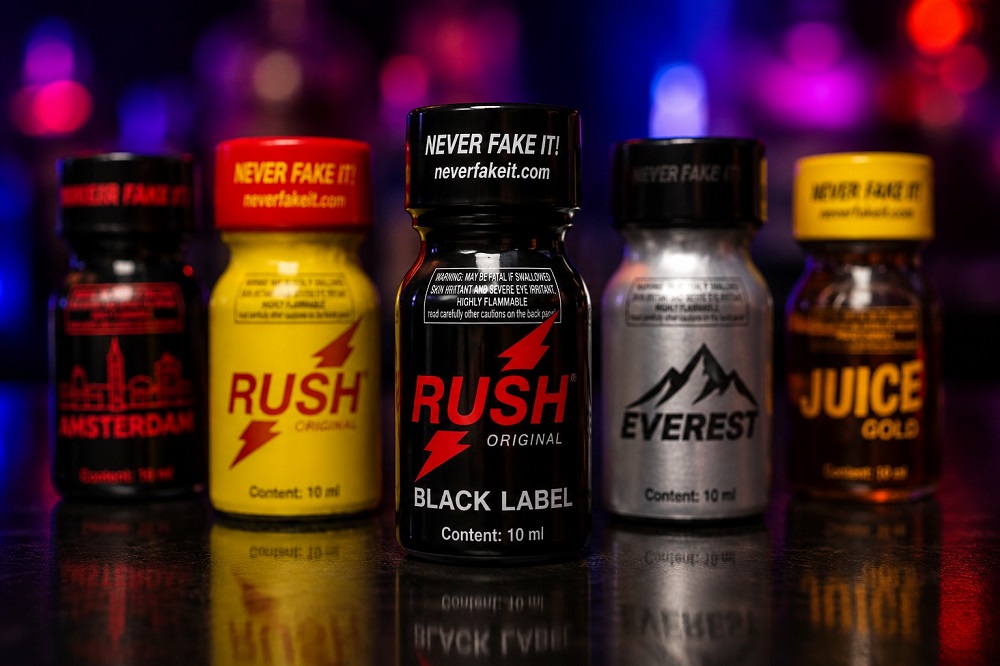
These terms may form part of a product’s name or distinguish versions within a brand’s range. Their meaning depends on the manufacturer.
Use the complete product name to identify an item, then check its documented specifications. Avoid treating naming conventions as a universal ranking system.
Does Bottle Size Indicate Strength?
No. A stated volume such as 10 mL or 30 mL identifies quantity, not concentration or quality.
When comparing listings, check:
- The volume of each bottle.
- The number of bottles included.
- The complete product name and version.
- Whether the photograph matches the selected option.
A larger container does not establish a stronger formulation. A multipack also should not be confused with a different product specification.
Can Packaging Establish Product Quality?
Packaging can help identify an item and communicate warnings, manufacturer details and handling information. Its appearance cannot verify the contents.
Dark glass, an aluminum container or a particular cap design does not independently prove superior stability or quality. Claims about a container preserving a formulation require evidence applicable to that product and packaging.
Similarly, avoid assuming that beads, pellets or other components have a particular function unless the manufacturer documents it.
Does a Higher Price Mean a Better Product?
Price alone cannot establish quality.
Different prices may reflect bottle volume, packaging, distribution costs or the number of items included. Any claim that a higher-priced product has superior purity, consistency or performance needs its own supporting evidence.
How Useful Are Online Reviews?
Reviews may help identify recurring questions about order accuracy, delivery, packaging or customer service.
However, an individual review does not replace product testing or manufacturer documentation. A statement that an item is “stronger” does not establish a measured difference unless the reviewer provides a valid basis for that comparison.
Separate comments about the ordering experience from factual claims about the product itself.
Follow Product-Specific Storage Instructions
Read the manufacturer’s label and follow its handling and storage precautions. Keep chemical products in their original labeled containers and away from children.
Do not rely on generic advice about refrigeration, transferring contents, or refilling bottles. Storage recommendations should apply to the exact product, as provided by the manufacturer.
For questions about a USA Solvent listing, contact USA Solvent with the complete product name and the statement you would like clarified.
Frequently Asked Questions
Does “strongest” identify an ingredient or concentration?
No. The word alone does not specify either. Look for manufacturer verified ingredient information about the exact product.
Does label color indicate formulation?
Not reliably. Label colors distinguish branding or versions; they are not standardized composition indicators.
Does “original” establish authenticity?
No. It may be part of a product name. Supplier reputation and manufacturer confirmation are more useful than the word alone.
Can packaging changes indicate a formulation change?
Possibly, but neither should be assumed from the other. Ask the supplier what changed and whether the product information remains current.
What is the most useful way to compare listings?
Compare complete names, bottle volumes, quantities and documented manufacturer information. Seek clarification when those details conflict.
About Author